
When it’s time to place a new order, you might be relying on a combination of experience, gut feeling, and a rough look at what’s low in stock. That works — up to a point. Beyond that point, it starts costing money.
The purchasing decision you might be getting wrong
The key to buying right — having the materials your customers want, in the right quantities, without excessive slow-moving stock — is using rotation data to guide your purchasing decisions.
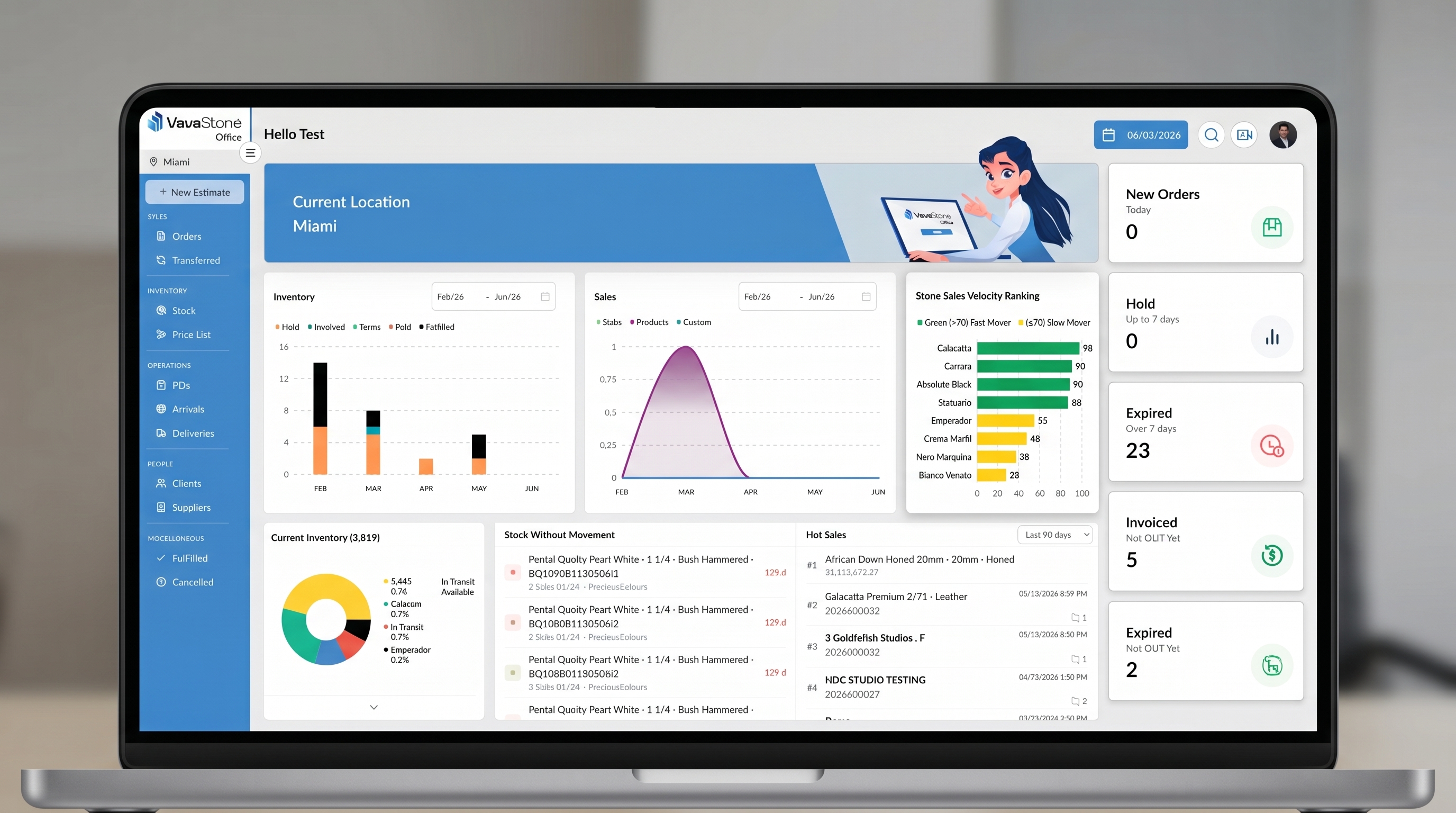
What rotation data tells you
Rotation data answers a simple question: how long does it take for a given material to go from arriving at your yard to being sold?
A slab of Calacatta Gold that sells within two weeks of arrival has a very different business profile than a slab of an exotic quartzite that sits for four months. Both might be profitable, but they require very different inventory strategies.
- Fast-moving materials: keep higher stock levels, reorder earlier, consider negotiating volume pricing with suppliers.
- Slow-moving materials: reduce reorder quantities, consider pricing adjustments to accelerate sales, evaluate whether to continue carrying them.
- Seasonal patterns: some stones sell heavily in spring renovation season and slow in winter — rotation data reveals these patterns over time.
The cost of ignoring rotation
Every slab sitting in your yard represents capital that isn’t generating revenue. If you have materials that consistently take 90+ days to sell, you’re essentially financing your supplier’s business with your own cash flow. Reducing slow-moving inventory — even modestly — frees up capital that can be deployed in faster-turning stock.
Getting to rotation data doesn’t require complex analytics
You don’t need a sophisticated business intelligence system to track rotation. You need inventory records that capture when a slab arrived and when it was sold. From that basic data, you can calculate average days-to-sale by material type, supplier, or size.
Most modern inventory platforms calculate this automatically and present it in a simple dashboard. The insight is there — you just need a system that captures the right data consistently.
Want to see how VavaStone surfaces rotation data automatically?
Book a free 20-minute demo at vavastone.com and we’ll show you exactly what your inventory rotation looks like.
Book a Demo